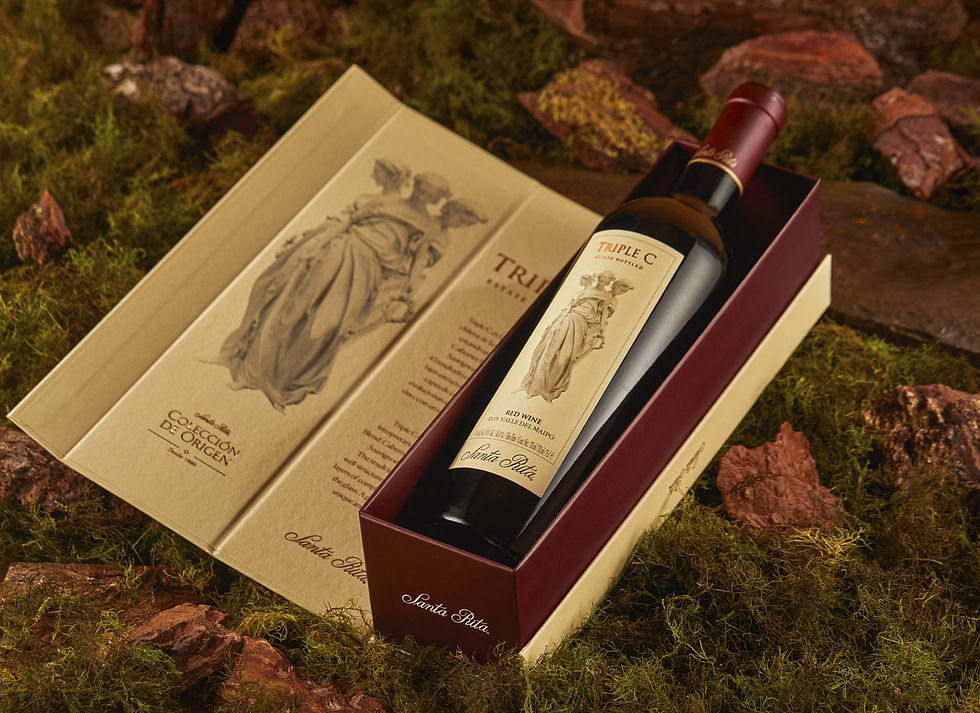
2020 Triple C Santa Rita.

Updated: Aug 28
The Chilean winemaking starts with the conquistadors in the XVIth century, but contemporary production began in the mid-XIXth century with the planting French grapes: Cabernet Sauvignon, Merlot, Carmenere, and Cabernet Franc. The first to third types became the most growing afterward. The settlement of Frenchmen in the late XXth century contributed to the viticultural knowledge. Sometimes my inner feelings whisper to me about worthiness when I look at wines–they never were wrong. I had something of that toward Triple C Santa Rita. Its vintage is 2020, the content is fourteen degrees, and includes Cabernet Franc (40%), Cabernet Sauvignon (45%), and Carmenere (15%). I raised attention to Carmenere, which is now rarely can find in France (just a few hundred acres), and that grape became a flagship in Chile.
Carmenere came from Bordeaux and belongs to six original grapes of the region (the rest are: Cabernet Franc, Cabernet Sauvignon, Petit Verdot, Merlot, and Malbec). It is distantly related to Merlot, with which mistaken in Chile in the XIXth century. The actuality is that Cabernet Franc is a parent of Carmenere, Merlot, and Cabernet Sauvignon. The bottle that I had is from the winery Vina Santa Rita that was founded in 1880.
Behind the dark color was a dark scent in which felt an elite bouquet. Once I caught grape berries. It was of wines with a big price that needed time for saturation of the air and develop a lovable taste from the unformed state. It can’t be attractive if drink it already because you taste grapes from ashes. The waiting makes the reaching of harmony. There acidity dissipates, although never intrusive, and likeable in its short appearances. It lingers in rinsing in a mouth where it isn’t attractive. This wine needs to swallow without holding. The aftertaste relaxes the body and sends into hovering. The beverage is a delight, but it doesn’t make a loud effect.